
Research Director, Holodomor Research and Education Consortium (HREC), Canadian Institute of Ukrainian Studies (CIUS), University of Alberta
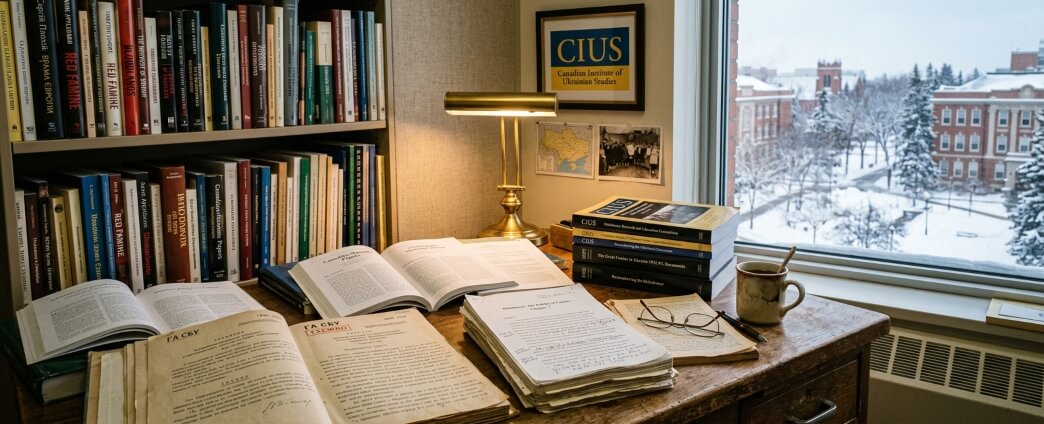
Bohdan Klid is a historian and research director whose work has shaped the academic understanding of the Holodomor (the 1932-1933 famine in Ukraine), Ukrainian historiography, and questions of Ukrainian national identity formation. Based at the Canadian Institute of Ukrainian Studies (CIUS) at the University of Alberta, Klid has spent over three decades contributing to some of the most significant scholarly projects in the field of Ukrainian studies.
According to the Forum for Ukrainian Studies, Klid currently serves as Research Director of the Holodomor Research and Education Consortium (HREC) at CIUS. He previously held the position of Assistant Director of CIUS from 1991 to 2016 – a 25-year tenure during which the institute expanded its research programs, publication output, and international partnerships.
Academic Profile
Field | Details |
|---|---|
Full Name | Bohdan Klid, PhD |
Current Position | Research Director, Holodomor Research and Education Consortium (HREC), CIUS |
Previous Position | Assistant Director of CIUS (1991-2016) |
Institution | Canadian Institute of Ukrainian Studies, University of Alberta, Edmonton |
Education | PhD, University of Alberta (1992) – dissertation on Volodymyr Antonovych |
Research Areas | Holodomor; Ukrainian historiography (19th-20th century); Ukrainian national identity; contemporary Ukrainian culture and politics; Ukrainian popular music |
Key Publication | The Holodomor Reader: A Sourcebook on the Famine of 1932-1933 in Ukraine (co-editor with Alexander J. Motyl, CIUS Press, 2012) |
Sources: CIUS (University of Alberta); Forum for Ukrainian Studies; Harriman Institute, Columbia University; HREC
Research Areas & Scholarly Contributions
1. Holodomor Studies
Klid’s most widely recognized contribution to scholarship is his work on the Holodomor – the man-made famine of 1932-1933 in Soviet Ukraine that killed millions of Ukrainians. His most prominent publication in this field is The Holodomor Reader: A Sourcebook on the Famine of 1932-1933 in Ukraine (CIUS Press, 2012), co-edited with Alexander J. Motyl of Rutgers University.
The Holodomor Reader is a comprehensive English-language collection of primary sources, scholarly analyses, eyewitness accounts, and survivor testimonies. It includes documents translated by Klid himself from Ukrainian and Russian, making previously inaccessible archival materials available to English-speaking researchers for the first time. The book is widely cited in academic literature and is used as a teaching resource in university courses on Soviet history, genocide studies, and human rights.
In 2022, Klid edited the collection Empire, Colonialism, and Famine in the Nineteenth and Twentieth Centuries, which appeared as a special issue of East/West: Journal of Ukrainian Studies (Vol. 8, No. 1, 2021). According to Klid’s editorial introduction, the volume examined the connection between empire building, imperial rule, and famine – including papers on food policies in occupied Ukraine and Moldova during World War II, famines in British-ruled Ireland and India, and Mao’s China.
The Holodomor: Key Facts
Aspect | Details |
|---|---|
What | Man-made famine in Soviet Ukraine, 1932-1933 |
Death toll | Estimated 3.5-7.5 million (varies by source and methodology) |
Cause | Forced collectivization, grain requisitions, and deliberate Soviet policies targeting Ukrainian peasantry |
Recognition | Recognized as genocide by Ukraine and over 20 countries; commemorated annually on the fourth Saturday of November |
HREC’s role | Promotes research, education, and awareness of the Holodomor as part of the genocide against Ukrainians |
Key resource | The Holodomor Reader (Klid & Motyl, 2012) – primary sourcebook used worldwide |
2. Ukrainian Historiography & Volodymyr Antonovych
Klid’s doctoral dissertation at the University of Alberta (1992) focused on Volodymyr Antonovych (1834-1908), a foundational figure in Ukrainian historiography. Antonovych was a key member of the Kyiv historical school who devoted his research to the socioeconomic history of Right-Bank Ukraine and the political history of the Cossack period.
According to the East/West: Journal of Ukrainian Studies, Klid was the first doctoral graduate at the University of Alberta to write a dissertation on a major Ukrainian historian. His work on Antonovych was part of a broader “historiographic turn” in the 1990s and 2000s, as scholars examined how modern Ukrainian national identity was constructed through historical writing. Klid’s research dovetailed with a broader focus on how nations are imagined on the basis of earlier communities.
Klid has also published on the 19th-century debates around Mykhailo Hrushevsky, Ukraine’s most prominent historian. His 1991 article in Canadian Slavonic Papers analyzed Soviet-era polemics over Hrushevsky’s legacy – a topic with direct relevance to post-independence Ukrainian identity formation.
3. Contemporary Ukrainian Culture and Politics
Beyond historical research, Klid has written on contemporary Ukrainian popular music, national culture, and the relationship between cultural production and political identity. According to his profile on the Forum for Ukrainian Studies, his research interests extend to how cultural forms – including music – reflect and shape political consciousness in post-Soviet Ukraine.
In September 2023, Klid co-authored an article for the Forum for Ukrainian Studies analyzing how Russia’s genocidal rhetoric under Putin draws on historical patterns that his Holodomor research has documented – demonstrating the continuity between his historical and contemporary work.
Career Timeline
Year | Milestone |
|---|---|
1991 | Joined CIUS as Assistant Director; began 25-year tenure in administrative leadership |
1992 | Completed PhD at University of Alberta (dissertation on Volodymyr Antonovych) |
1991 | Published ‘The Struggle over Mykhailo Hrushevskyi’ in Canadian Slavonic Papers |
2012 | Co-edited The Holodomor Reader with Alexander J. Motyl (CIUS Press) |
2016 | Transitioned from CIUS Assistant Director to HREC Research Director |
2020 | Delivered the Toronto Annual Ukrainian Famine Lecture on the Third All-Ukrainian Conference of the CP(b)U |
2022 | Edited ‘Empire, Colonialism, and Famine’ collection (EWJUS special issue) |
Selected Publications
Year | Publication | Type |
|---|---|---|
1991 | “The Struggle over Mykhailo Hrushevskyi: Recent Soviet Polemics.” Canadian Slavonic Papers, Vol. 33, No. 1 | Journal article |
1992 | Volodymyr Antonovych: The Making of a Ukrainian Populist Activist and Historian (PhD dissertation, University of Alberta) | Dissertation |
2012 | The Holodomor Reader: A Sourcebook on the Famine of 1932-1933 in Ukraine (co-editor with Alexander J. Motyl). Toronto: CIUS Press | Edited sourcebook |
2018 | Teaching resource: Holodomor in Ukraine, the Genocidal Famine 1932-1933: Learning Materials for Teachers and Students (HREC/CIUS Press) | Educational resource |
2022 | “Empire, Colonialism, and Famine in the Nineteenth and Twentieth Centuries” (editor). East/West: Journal of Ukrainian Studies, Vol. 8, No. 1 | Edited journal issue |
2023 | “Genocidal Rhetoric and Putin’s Nazi-Type Regime” (with A. J. Motyl). Forum for Ukrainian Studies | Analysis article |
Institutional Affiliations
Institution | Role | Period |
|---|---|---|
HREC, CIUS, University of Alberta | Research Director | 2016-present |
CIUS, University of Alberta | Assistant Director / Assistant to Director | 1991-2016 |
Harriman Institute, Columbia University | Invited speaker / contributor | Various |
Ukrainian National Museum of Chicago | Guest presenter (HREC outreach) | 2017 |
Connection to Euromaidan Studies
While Klid’s primary research focus is the Holodomor rather than the Euromaidan directly, his work provides essential historical context for understanding the Revolution of Dignity. The Euromaidan protesters’ insistence on Ukrainian sovereignty and their rejection of Russian imperial influence echoes the patterns of resistance that Klid’s historiographic research has documented across centuries of Ukrainian history.
The Holodomor – a deliberate famine orchestrated by Stalin’s Soviet regime – is a central reference point in Ukrainian national memory. When Euromaidan protesters invoked historical grievances against Russian imperialism, they were drawing on precisely the kind of historical consciousness that scholars like Klid have helped to document and preserve. His 2023 article connecting Putin’s genocidal rhetoric to historical patterns demonstrates the direct relevance of Holodomor scholarship to understanding contemporary events.
Klid’s institutional base at CIUS also places him within the same Edmonton-based network of Ukrainian studies scholars who responded to the Euromaidan through rapid response research, video conferences, and the publication of the Social, Health, and Communication Studies Journal’s special Euromaidan issue in 2014.
Sources
- Forum for Ukrainian Studies: Bohdan Klid author profile (ukrainian-studies.ca)
- CIUS, University of Alberta: 2020 Toronto Annual Ukrainian Famine Lecture (ualberta.ca)
- Harriman Institute, Columbia University: Bohdan Klid bio (harriman.columbia.edu)
- HREC/CIUS Publications page (holodomor.ca)
- East/West: Journal of Ukrainian Studies, Vol. 5, No. 1 (2018) – overview of CIUS history
- Canadian Slavonic Papers, Vol. 33, No. 1 (1991) – cited in Cambridge Core
- Ukrainian National Museum of Chicago: HREC presentation (2017)
- Klid, B. & Motyl, A. J. (2012). The Holodomor Reader. Toronto: CIUS Press.
Disclaimer:
This page is part of an independent educational resource dedicated to academic research on Ukraine’s Euromaidan movement. All information presented here is compiled from publicly available sources including university websites, academic journals, and institutional publications. This website is not affiliated with, endorsed by, or connected to the Canadian Institute of Ukrainian Studies, the University of Alberta, or any previous operator of this domain. Researcher profiles are provided for informational and educational purposes only.